
- Home »
- Business Bankruptcy
Business Bankruptcy
Lender vs Debtor on the Payment of Post-Petition Interest

The Battle Over Post-Petition Interest for Oversecured Creditors In bankruptcy, an oversecured creditor (in which the value of its collateral is higher than its claim) is first in line to be paid. Unfortunately, oversecured creditors are also entitled to post-petition interest (interest that accrues or would accrue after the start of bankruptcy proceedings, regardless of whether or not it is allowed in the proceeding). As a debtor who successfully increases the value of the asset/collateral—how do you alleviate an increased claim and maintain liquidity? And what say does the secured […]
Read More“Bankruptcy filings are mounting. And that’s just the tip of the iceberg” – – – A Dissection & Analysis

[Editor’s Note: This article was originally published on LinkedIn on September 20, 2020.] There has been a significant uptick in the number of articles appearing in mainstream media (e.g. newspapers) about the wave of bankruptcies that has already started to appear. One article (linked here), authored by Matt Egan for CNN Business and published about a week ago, caught my particular attention. It is well-written but there were a few things about it that were wrong or, at least, not entirely right. And, so here I am with my thoughts… In […]
Read MoreThe Northwest Company LLC – Court Rejects Debtors’ Choice of Successful Bidder, Names Formerly Back-Up Bidder Ashford as Auction Winner

August 25, 2020 – In an unusual twist to an unusual asset sale process, the Court hearing the Northwest Company cases approved the $31.46mn sale of the Debtors’ assets to Ashford Textiles, LLC and Ashford Partners, LLC (together, “Ashford” or “Purchaser”) [Docket No. 301]. The asset purchase agreement (the “APA”) governing terms of the sale is attached to the order as Exhibit 1. On August 7th, the Debtors named Ashford as the back-up bidder, with Cathay Home, Inc. (“Cathay”) named as the successful bidder, notwithstanding that the Cathay bid was […]
Read MoreKuney’s Corner: The Many Fates of Intercreditor Agreements

Potential Outcomes of Intercreditor Deeds Secured creditors often seek agreement among themselves in order to limit intercreditor conflict and expedite fulfillment of their respective claims against a borrower in a Chapter 11 case. One might call it a “strength through peace” approach. However, in Chapter 11 cases, some courts have ignored intercreditor agreements in cramdown situations, refused to enforce certain terms as contrary to public policy, and have construed a given intercreditor agreement term as not covering the controversy at issue. We note that the likely fate of an […]
Read MoreForce Majeure, MAC Clauses & COVID-19: A Court Speaks to Every Commercial Tenant in the United States

Why You Should Include a Force Majeure Clause in Lease Agreements The Northern District of Illinois delivered a victory last month for a tenant who could not operate its leased space as contemplated at the time it entered into the lease (and as it had been operating up until COVID-19), because continuing to operate normally would have violated an order issued by the Governor of the State of Illinois. The case in which this ruling was issued is In re Hitz Restaurant Group, 20 B 05012 (June 20, […]
Read MoreLimiting Credit Bidding in Section 363 Bankruptcy Sales Post-In Re Aéropostale, Inc.

Chilled Credit Bidding and the Section 363 Sale Section 363(k) of the Bankruptcy Code (the “Code”) allows a secured creditor to bid at a section 363 sale and use the amount of their claim to offset the purchase price at the sale, called “credit bidding.” A court may limit this right “for cause.” The “for cause” standard is not defined in the Code, and disagreement exists as to what constitutes “for cause.” Traditional bases for limiting credit bidding include challenges related to the lien itself, failure to correctly assert the […]
Read MoreDealing with Corporate Distress 04: Chapter 11—If You’ve Seen One, You’ve Seen Them All

The ABCs of ABCs, Business Bankruptcy, & Corporate Restructuring/Insolvency This installment of our series is required reading for the next, which attempts the audacious task of describing a “typical” chapter 11. And if you didn’t get it, the title of this installment, “Chapter 11—If You’ve Seen One, You’ve Seen Them All,” is intended to be sarcastic. That said… The Predictability of Chapter 11 and Likely Outcomes When a company files chapter 11, its experience will bear some resemblance to every chapter 11 that came before. We’re not saying anything momentous […]
Read MoreHow to Discharge Student Loan Debt in Bankruptcy – Yes, It’s Possible!

The Complexity of Student Loan Debt in Bankruptcy… Demystified Student loan debt has hit a record $1.6 trillion. This number is staggering on its own, but as millions of Americans lose their jobs and source of income during the COVID-19 pandemic, student loan borrowers have to look at their options for repayment. The U.S. government is allowing borrowers to suspend all federal loan principal and interest payments until September 30, 2020, but this still leaves many private loan borrowers at the hands of their lenders. For those experiencing extreme financial […]
Read MoreConvertible Securities: Appealing in this Uncertain Market

The market has changed a lot since our last look at convertible bonds about six months ago. Not only has the stock market been shaken by the potential fall-out from the Covid-19 stay-at-home orders, but also interest rates have fallen sharply. The market has shown resilience, but risks clearly remain as the economic recovery may not happen as quickly as investors expect. Convertible bonds and convertible preferred stocks can provide investors with possible participation in future gains in the underlying common stock, along with attractive yields, while providing some measure […]
Read MoreBank Stocks on Sale
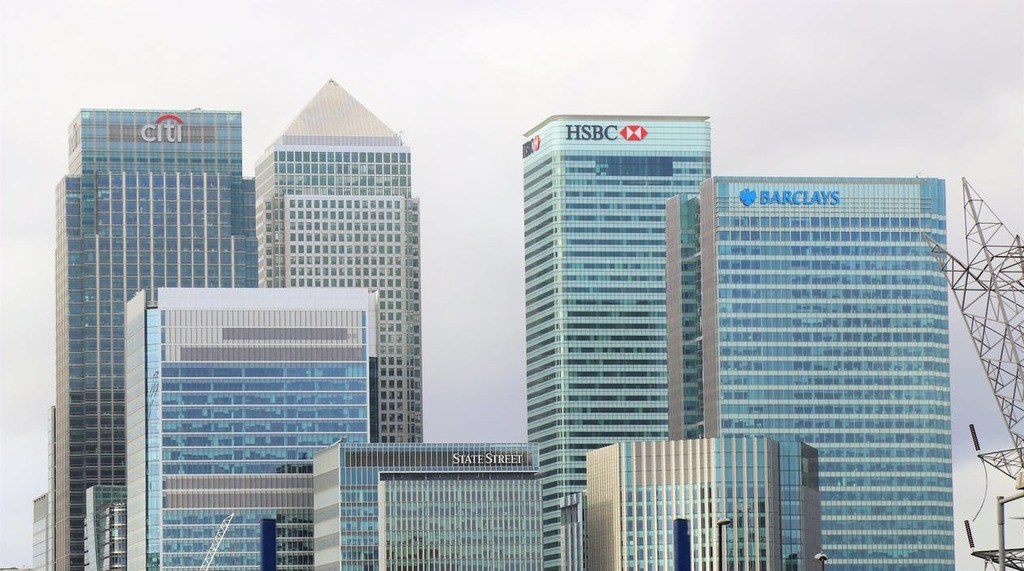
With the sharp slowdown in the economy, bank stocks have declined significantly, and, unlike the broad S&P 500 Index, have not recovered much of their lost value. Year-to-date, our universe of 180 bank stocks has declined 31%, compared to the 6% decline in the broad market. Driving the weak shares are concerns over higher credit losses, particularly in commercial real estate and small/medium business loans. Banks have begun to increase their reserves, but the extent of further losses is not fully known. A new accounting rule (Current Expected Credit Losses, […]
Read More